Salers cattle: weight and characteristics
A hardy mahogany-red mountain breed from France with lyre-shaped horns, very easy calvings and excellent mothering. Weights and use.

At a glance
| Origin | France (Cantal, Auvergne) |
|---|---|
| Purpose | Beef |
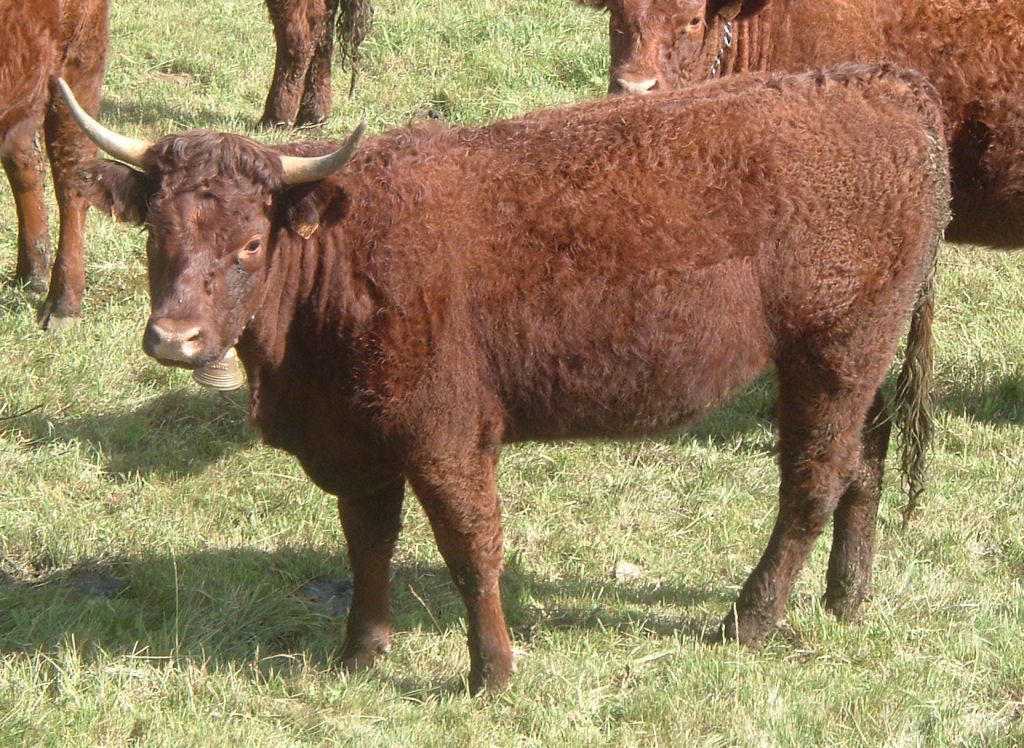
| Colour | Deep mahogany red, with a long curly coat |
| Horns | Lyre-shaped horns |
| Cow weight | 650–900 kg |
| Bull weight | 1,000–1,400 kg |
| Calf birth weight | 35–40 kg |
| Daily gain when fattening | 1.1–1.4 kg/day |
| Calving | Very easy |
| Temperament | Calm, protective mothers |
Typical ranges for adult animals; they vary with the line, feeding and management.
History and origin
The Salers comes from the volcanic mountains of Cantal in Auvergne, central France, and is named after the town of Salers. It was long kept for milk, used for Salers and Cantal cheese, as well as for work and meat. Today most Salers cows are kept as suckler cows.
Appearance and character
Salers are deep mahogany red, with a thick, often curly coat and long lyre-shaped horns; a black variety also exists. They are large, hardy animals that cope with cold, rain and steep pastures. The cows are calm but protective of their calves.
How much does a Salers cow weigh?
A mature Salers cow usually weighs 650–900 kg and a bull 1,000–1,400 kg. Calves weigh about 35–40 kg at birth.
Young bulls in fattening typically gain 1.1–1.4 kg a day. Salers cows give plenty of milk, so the calves grow well on the cow and are heavy at weaning.
Calving and fertility
Salers is known for very easy calvings, high fertility and long working lives. Many cows calve unaided out on the pasture.
Use in crossbreeding
In France, Salers cows are often bred to Charolais bulls: the crossbred calves grow fast and carry more muscle, while the cow brings milk and easy calving.
On a small farm
Salers suits farms with hilly or mountain pasture and little housing. The cows need little help, but their horns and protective nature call for good handling facilities at calving and weighing.
Other breeds
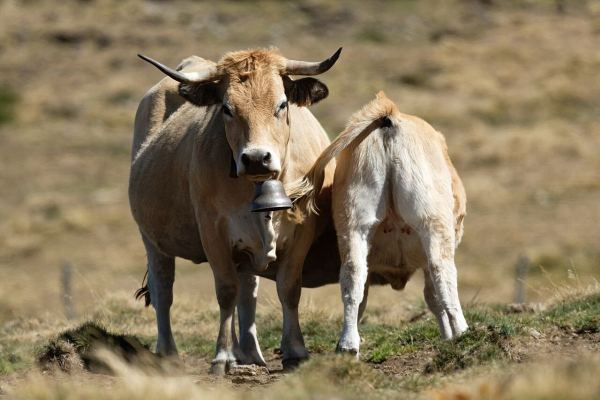
Aubrac
A hardy, wheat-coloured French mountain breed with dark-rimmed eyes, easy calvings and a long working life. Weights and use.
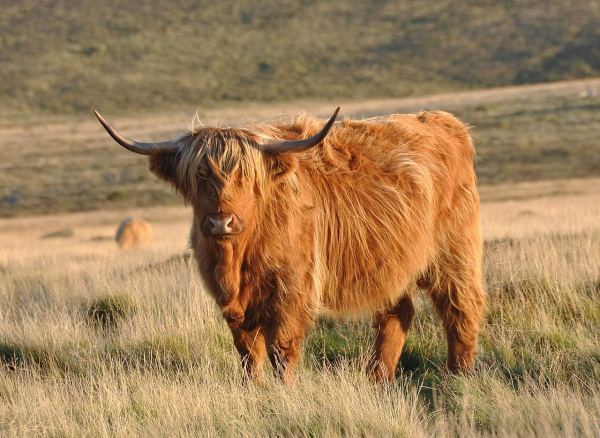
Highland cattle
A small, long-haired Scottish breed with long horns that lives outdoors all year on poor pasture. Weights, slow growth, calving and tips.
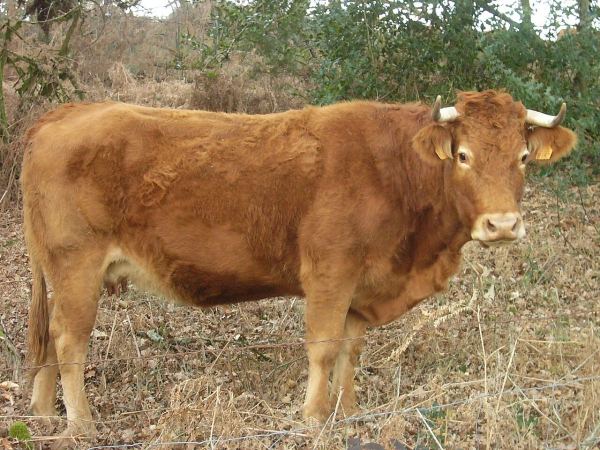
Limousin
A golden-red French beef breed with fine bones, a high share of meat and easy calvings for its size. Weights, growth and crossbreeding.