
Aubrac cattle: weight and characteristics
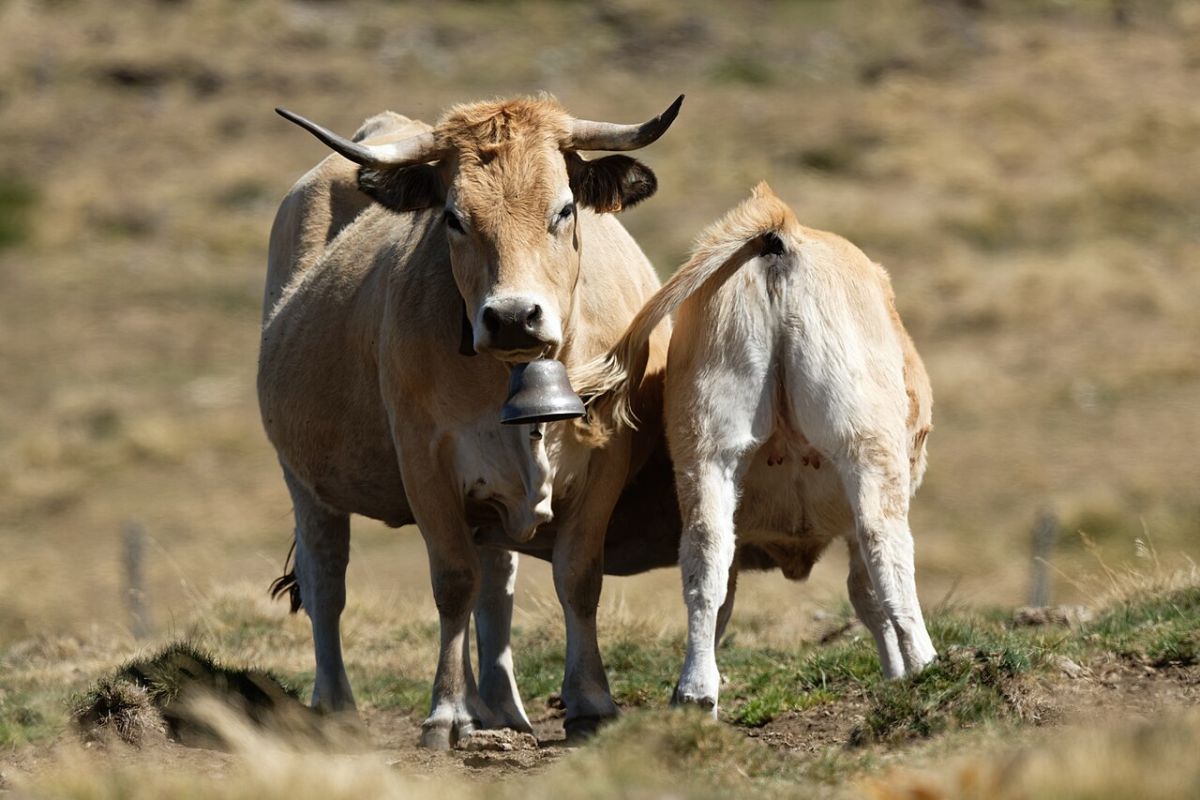
A hardy, wheat-coloured French mountain breed with dark-rimmed eyes, easy calvings and a long working life. Weights and use.

At a glance
| Origin | France (Aubrac plateau) |
|---|---|
| Purpose | Beef |
| Colour | Wheaten to fawn, with a black muzzle ringed with white |
| Horns | Lyre-shaped horns |
| Cow weight | 550–650 kg |
| Bull weight | 900–1,000 kg |
| Daily gain when fattening | 1–1.3 kg/day |
| Calving | Very easy |
| Temperament | Calm |
Typical ranges for adult animals; they vary with the line, feeding and management.
History and origin
The Aubrac comes from the Aubrac plateau in the south of the Massif Central, France. It was long kept for milk, for Laguiole cheese, and for work. By the 1970s the breed was in decline, but it recovered as a suckler breed and is now kept across France and abroad.
Appearance and character
Aubracs are wheaten to fawn, darker on the neck and legs, with black hooves, a black muzzle ringed with white and dark-rimmed eyes. Both sexes have lyre-shaped horns with dark tips. They are medium-sized, hardy and calm.
How much does an Aubrac cow weigh?
A mature Aubrac cow usually weighs 550–650 kg and a bull 900–1,000 kg.
In fattening, young Aubrac bulls typically gain 1.0–1.3 kg a day. The cows are thrifty: they keep in good condition on poor pasture and still rear a good calf.
Calving and fertility
Aubrac cows calve very easily and few calves are lost at birth. They are fertile and long-lived: many stay in the herd for 10 years or more and raise 8 or 9 calves.
Use in crossbreeding
In France, many Aubrac cows are bred to Charolais bulls; the crossbred calves grow faster and are sold at weaning to be fattened.
On a small farm
Aubrac suits farms with poor or dry pasture and little time to watch over calvings. It is one of the least demanding beef breeds.
Other breeds
Salers
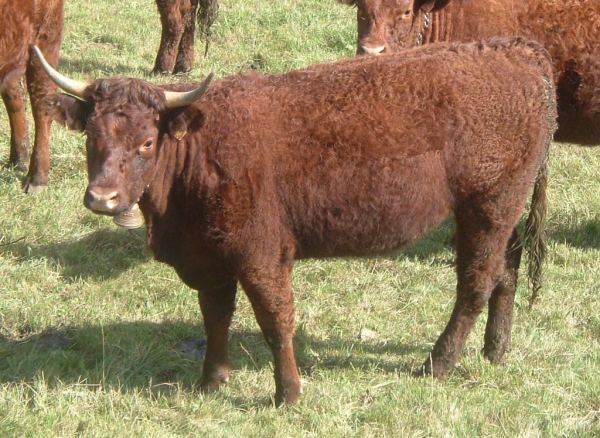
A hardy mahogany-red mountain breed from France with lyre-shaped horns, very easy calvings and excellent mothering. Weights and use.
Charolais
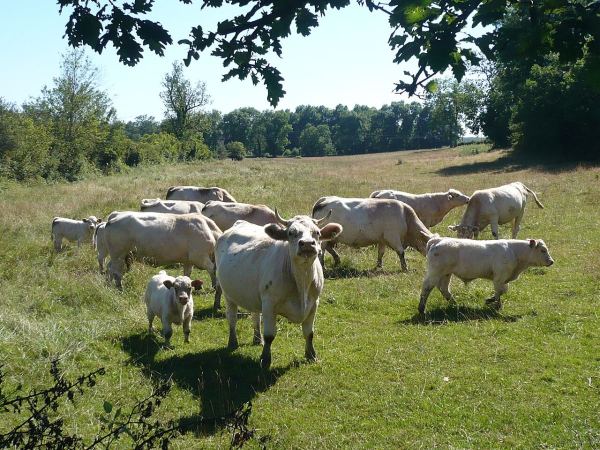
A large white beef breed from France with fast growth and a high meat yield. Weights, daily gain, calving and its use as a terminal sire.
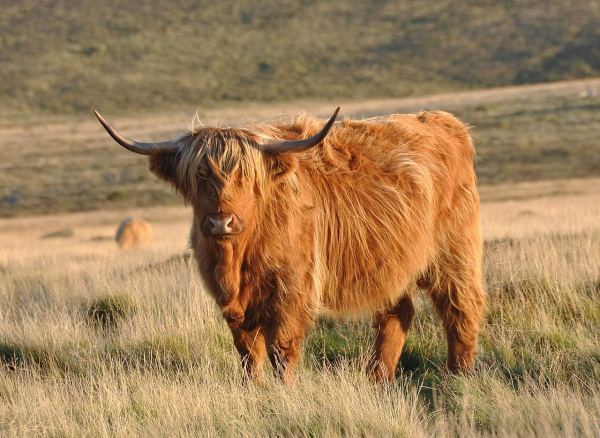
Highland cattle
A small, long-haired Scottish breed with long horns that lives outdoors all year on poor pasture. Weights, slow growth, calving and tips.