Aberdeen Angus cattle: weight and characteristics
A hornless, black or red beef breed from Scotland, known for easy calvings, good mothers and well-marbled meat. Weights, growth and tips for small farms.

At a glance
| Origin | Scotland (Aberdeenshire and Angus) |
|---|---|
| Purpose | Beef |
| Colour | Solid black or red |
| Horns | Naturally polled |
| Cow weight | 550–700 kg |
| Bull weight | 850–1,000 kg |
| Calf birth weight | 25–35 kg |
| Daily gain when fattening | 1.1–1.4 kg/day |
| Calving | Very easy |
| Temperament | Calm |
Typical ranges for adult animals; they vary with the line, feeding and management.
History and origin
The breed comes from the counties of Aberdeenshire and Angus in north-east Scotland, where it was developed from local hornless cattle in the early 19th century. The herd book was opened in 1862. Today Angus is one of the most widespread beef breeds in the world, with large populations in the Americas, Australia and Europe.
Appearance and character
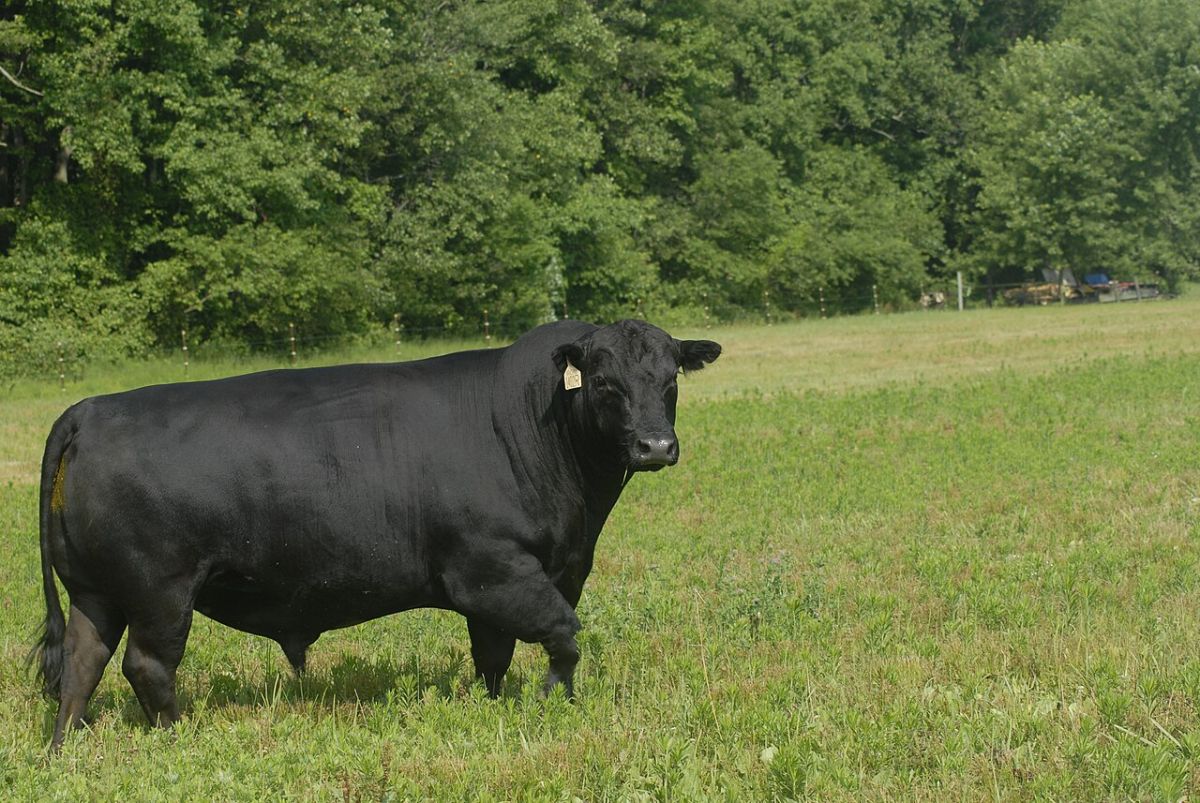
Angus cattle are solid black or, in the Red Angus, solid red. They are naturally hornless (polled), medium-sized and deep-bodied. They are calm and easy to handle, and do well outdoors all year in a cold climate.
How much does an Angus cow weigh?
A mature Angus cow usually weighs 550–700 kg and a bull 850–1,000 kg. Calves are small at birth, about 25–35 kg, but grow quickly on their mothers’ milk.
In fattening, Angus bulls and steers typically gain 1.1–1.4 kg a day. The breed finishes early: on a good ration it lays down fat sooner than continental breeds, so it is usually sold at a lower weight.
Calving and fertility
Angus cows calve easily, start breeding young and are known as careful, milky mothers. An Angus bull is a common choice for heifers of other breeds, because the calves are small at birth.
Use in crossbreeding
Angus bulls on dairy or beef cows give black, hornless calves that are born easily and sell well, and Angus-cross cows are valued as suckler cows. The Hereford × Angus cross, the black baldy, is one of the most common commercial crosses.
On a small farm
For a small farm, Angus is one of the easiest breeds to start with: quiet animals, few calving problems and no horns to remove. Its meat is finely marbled and often sold under the Angus name at a premium. Do not overfeed it: it fattens readily and can become too fat if kept too long.
Other breeds
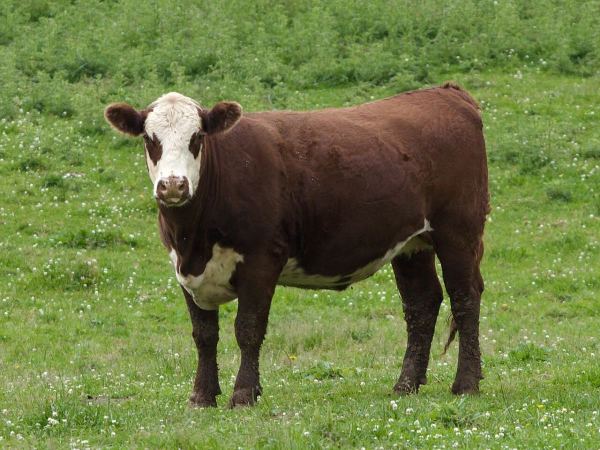
Hereford
A hardy red beef breed with a white face, from England, that fattens well on grass. Weights, calving, crossbreeding and tips for small farms.
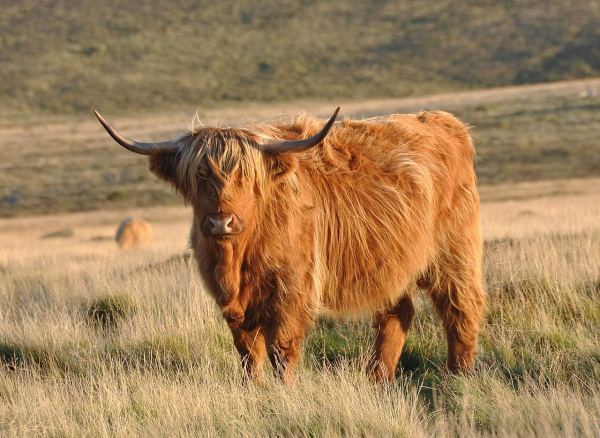
Highland cattle
A small, long-haired Scottish breed with long horns that lives outdoors all year on poor pasture. Weights, slow growth, calving and tips.
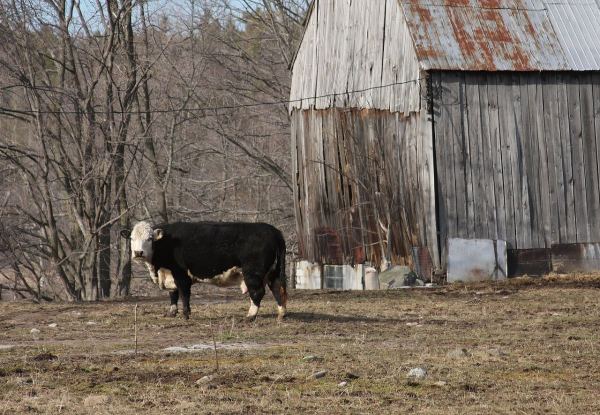
Crossbred cattle
How to work out the breed percentages of a crossbred calf, what F1 and backcrosses are, how much hybrid vigour brings and which beef crosses are common.