Hereford cattle: weight and characteristics
A hardy red beef breed with a white face, from England, that fattens well on grass. Weights, calving, crossbreeding and tips for small farms.

At a glance
| Origin | England (Herefordshire) |
|---|---|
| Purpose | Beef |
| Colour | Red with a white face, chest and belly |
| Horns | Horned or polled |
| Cow weight | 550–700 kg |
| Bull weight | 900–1,100 kg |
| Calf birth weight | 30–40 kg |
| Daily gain when fattening | 1–1.4 kg/day |
| Calving | Easy |
| Temperament | Docile |
Typical ranges for adult animals; they vary with the line, feeding and management.
History and origin
Hereford cattle come from Herefordshire in the west of England, where they were bred for work and beef in the 18th century. They were taken to the Americas, Australia and New Zealand and became one of the most numerous beef breeds in the world. Polled Herefords, without horns, were bred in the United States from the early 20th century.
Appearance and character
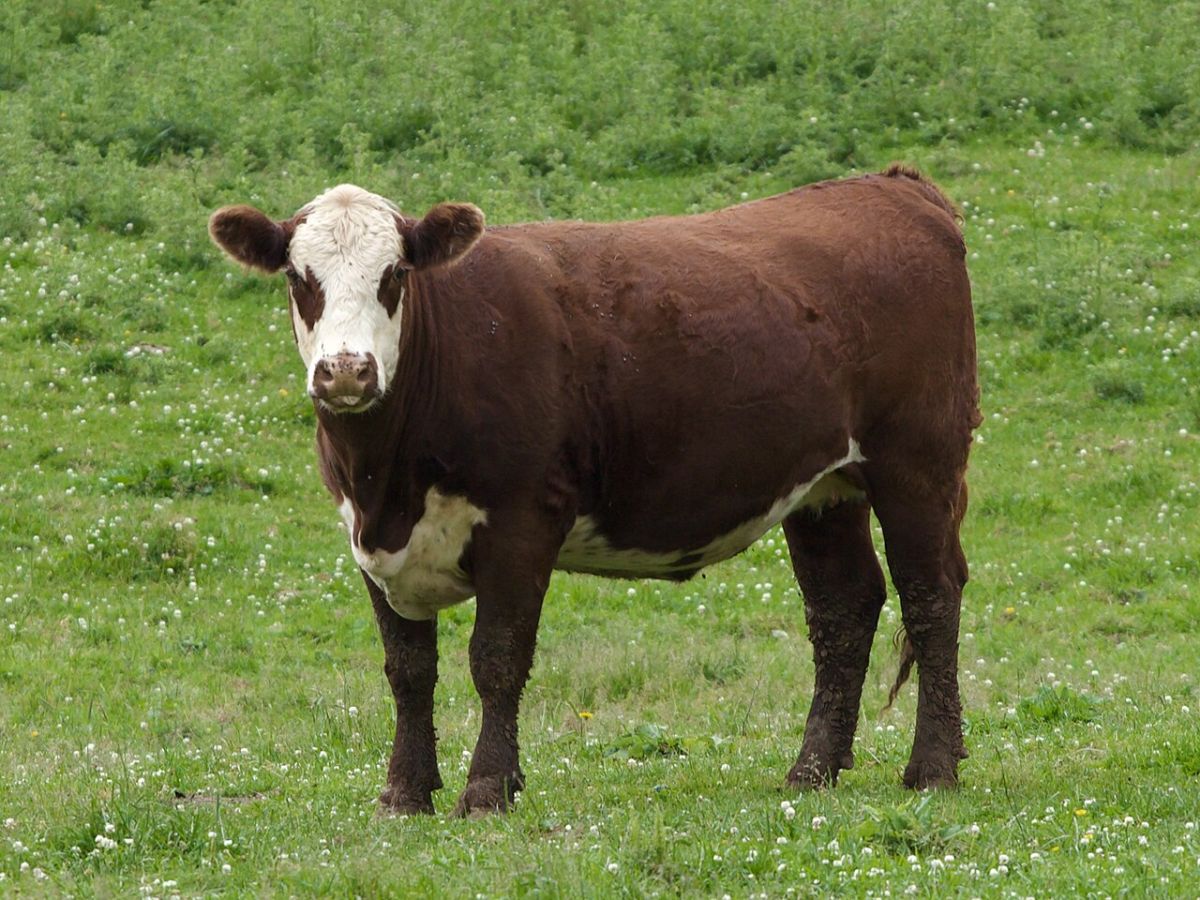
The body is deep red; the face, chest, belly and the tip of the tail are white. Herefords are horned or polled, medium to large, and known for a quiet, docile nature. They are very hardy and do well on grass and rough pasture.
How much does a Hereford cow weigh?
A mature Hereford cow usually weighs 550–700 kg and a bull 900–1,100 kg. Calves weigh about 30–40 kg at birth.
In fattening, Herefords typically gain 1.0–1.4 kg a day. They make good use of grass and forage and can be finished with less grain than the larger continental breeds.
Calving and fertility
Hereford cows calve easily, are fertile and long-lived, and make good mothers. The white face is dominant, so most crossbred calves of a Hereford bull have a white face too.
Use in crossbreeding
A Hereford bull on Angus cows, or an Angus bull on Hereford cows, gives the black baldy: a black calf with a white face, known for hybrid vigour, good growth and excellent crossbred cows. Herefords are also crossed with dairy cows to produce beef calves.
On a small farm
Herefords suit small farms with plenty of grass: they are calm, need little extra feed and calve easily. The light skin around their eyes makes them prone to eye problems in strong sunlight, so watch for watery or sore eyes in summer.
Other breeds
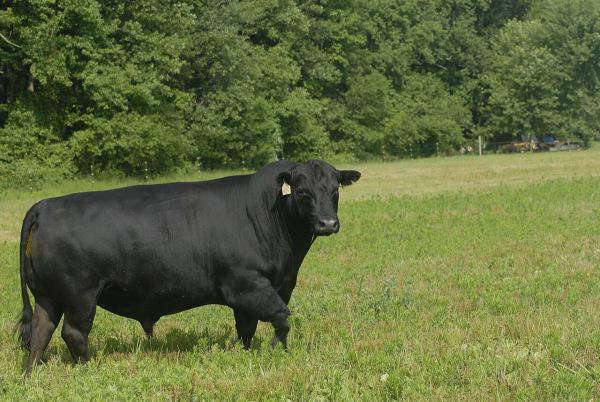
Aberdeen Angus
A hornless, black or red beef breed from Scotland, known for easy calvings, good mothers and well-marbled meat. Weights, growth and tips for small farms.
Simmental
A large red-and-white dual-purpose breed from Switzerland, kept for both milk and beef. Weights, daily gain, milk yield and crossbreeding.
Crossbred cattle
How to work out the breed percentages of a crossbred calf, what F1 and backcrosses are, how much hybrid vigour brings and which beef crosses are common.