
Bulgarian Grey cattle: weight and characteristics
An old Bulgarian breed of the Podolian grey cattle type, hardy and long-lived, now rare. Weights, growth, milk and keeping it today.
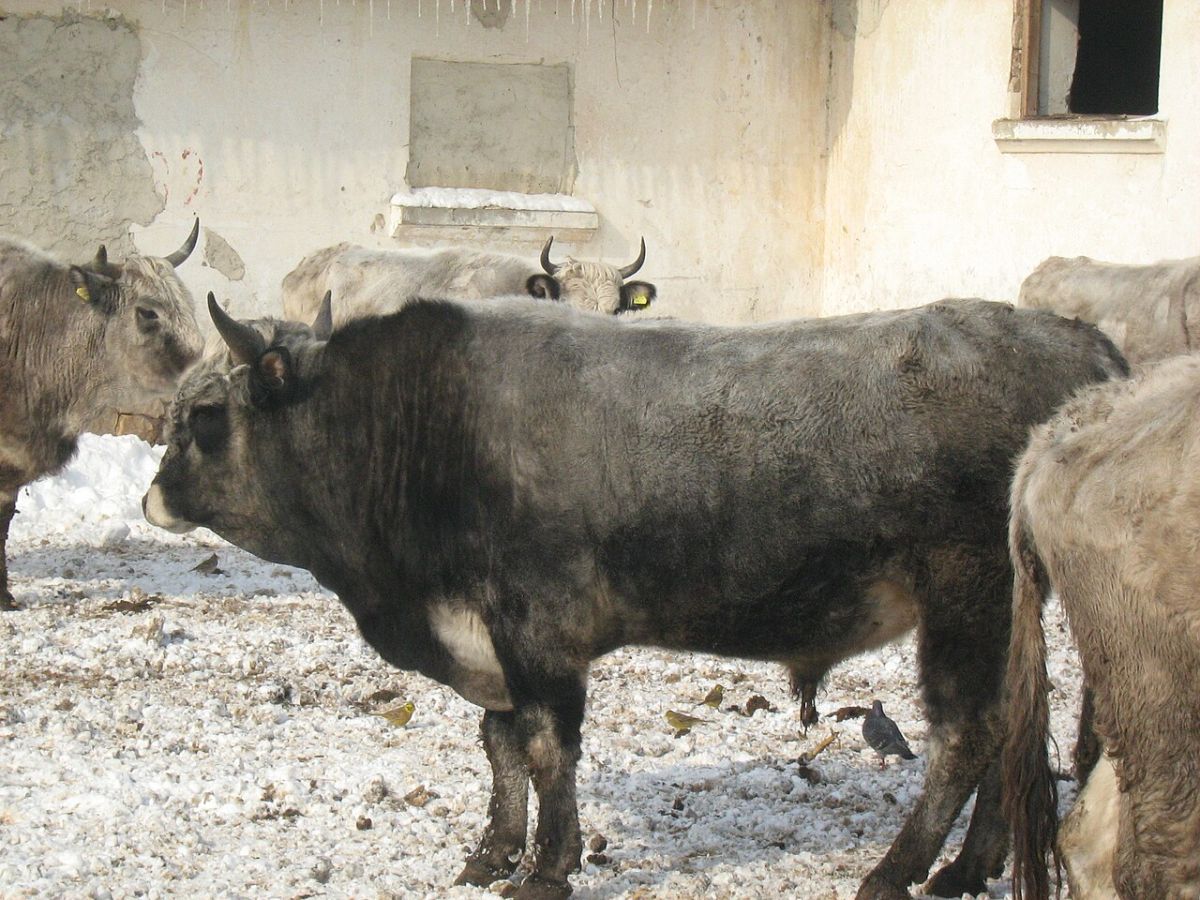

At a glance
| Origin | Bulgaria |
|---|---|
| Purpose | Dual-purpose: milk and beef |
| Colour | Grey, darker on the neck and underside; bulls almost black |
| Horns | Lyre-shaped horns |
| Cow weight | 420–460 kg |
| Bull weight | 600–700 kg |
| Calf birth weight | 22–23 kg |
Typical ranges for adult animals; they vary with the line, feeding and management.
History and origin
The Bulgarian Grey is one of the oldest Bulgarian cattle breeds and belongs to the Podolian group of grey steppe cattle. It was kept for centuries for work, milk and meat, and targeted selection began in 1928. The Iskar grey cattle from the valleys of the Iskar, Vit, Osam and Rositsa rivers are a strain of the breed. Today it is rare: in 2008 there were about 1,500 animals, mostly in Strandzha, Sakar and along the Iskar.
Appearance and character
The coat is grey, from light to dark, with a darker neck and underside; bulls are much darker. The muzzle, hooves and horn tips are black and the horns are lyre-shaped. The animals are small and lean, with strong legs and hard hooves, and walk with a light, quick step.
How much does a Bulgarian Grey cow weigh?
Bulgarian Grey cows weigh about 420–460 kg and bulls 600–700 kg. Calves weigh about 22–23 kg at birth.
The breed grows slowly: young cattle weigh about 280 kg at 12 months, 420 kg at 18 months and 480 kg at 24 months, and the killing-out percentage is 52–55%. The cows give about 2,600 litres of milk a lactation, with 4.2–4.5% fat.
Hardiness and health
The breed is fully adapted to Bulgarian conditions and copes well with heat, cold, wind, drought, insects and parasites. The calves are small at birth.
Use in crossbreeding
Bulgarian Grey cows were the maternal base of the Bulgarian Brown and of several beef types, crossed with bulls of larger breeds.
On a small farm
Today the breed is kept mainly to preserve it, on extensive pasture with little extra feed.
Keeping endangered local breeds can qualify for agri-environment support in Bulgaria; ask your local agricultural advisory office about the current rules.
Other breeds
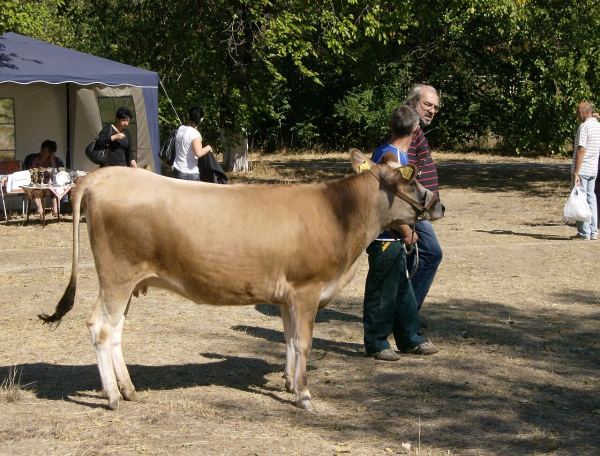
Rhodope Shorthorn
One of the smallest cattle breeds in Europe, from the Rhodope Mountains in Bulgaria: hardy, frugal and long-lived. Weights, milk and keeping it today.
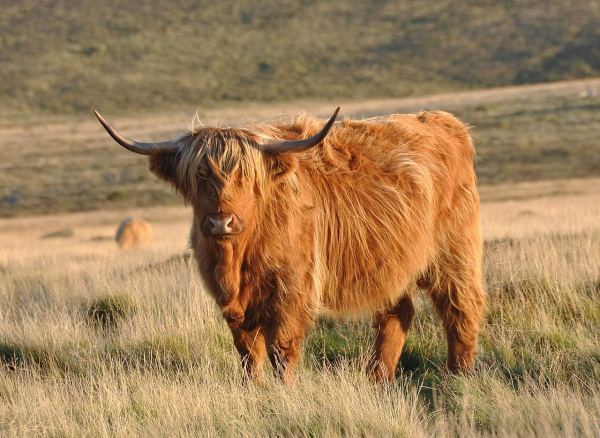
Highland cattle
A small, long-haired Scottish breed with long horns that lives outdoors all year on poor pasture. Weights, slow growth, calving and tips.
Simmental
A large red-and-white dual-purpose breed from Switzerland, kept for both milk and beef. Weights, daily gain, milk yield and crossbreeding.